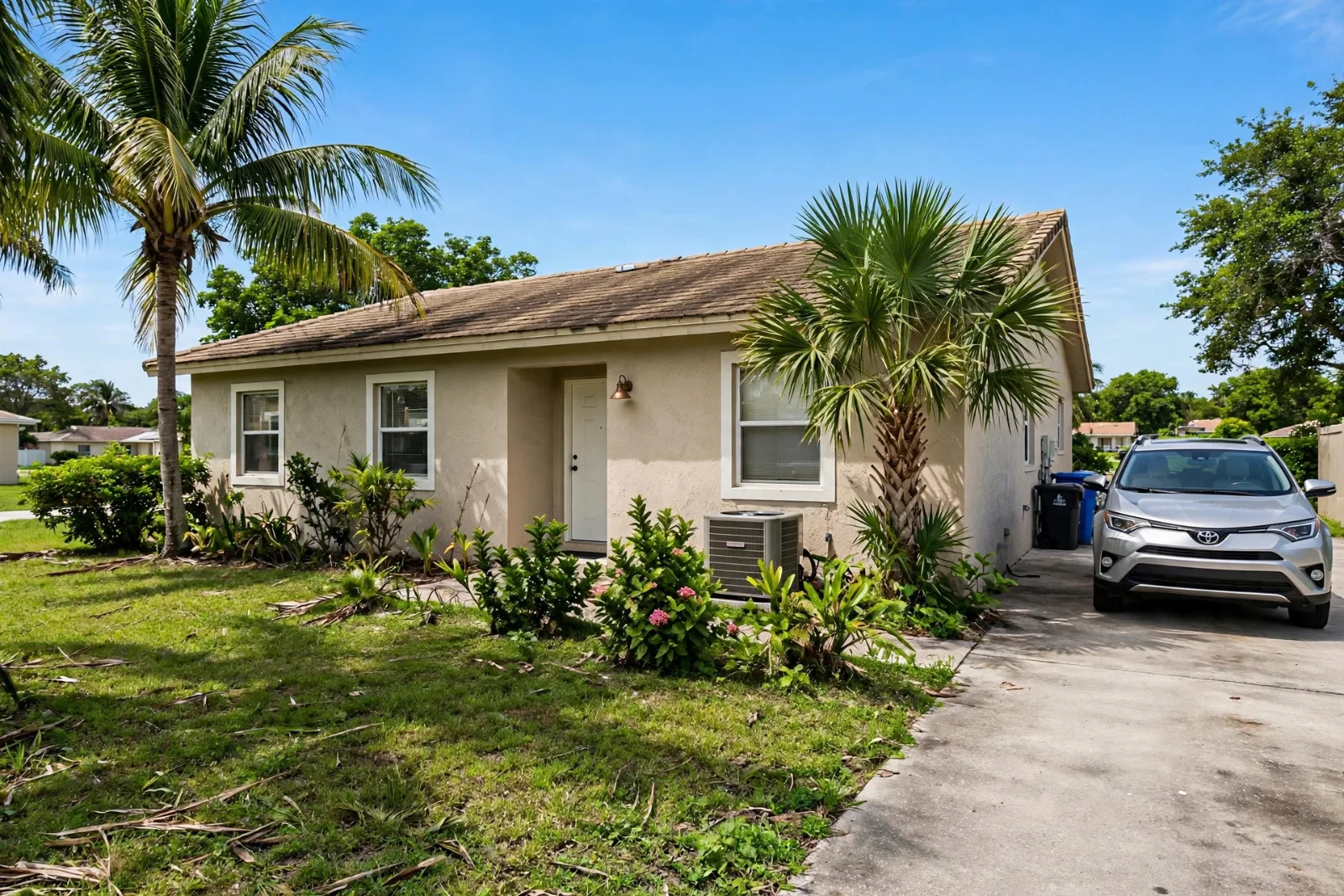
There's a single piece of paper that decides how much credit your insurer gives your home for standing up to hurricanes. It's called the OIR-B1-1802 — Florida's Uniform Mitigation Verification Inspection Form — and if you own a home here, it's worth knowing what it is.
A wind mitigation inspection is a licensed inspector's visit to document the construction features that help your home resist hurricane wind: when it was built, what the roof is made of and how it's fastened, how the roof connects to the walls, the roof's shape, and how every opening — windows, doors, skylights, garage doors — is protected. The findings go on the OIR-B1-1802, a standardized form every admitted Florida carrier accepts. Under Florida law (Section 627.0629), insurers must give actuarially reasonable discounts for the features it verifies.
In plain English: the inspection turns your home's storm features into line items your insurer has to price.
Why 2002 is the dividing line
The first question on the form — and the one that carries the most weight — is building-code era. Florida's statewide building code took effect March 1, 2002, after Hurricane Andrew exposed how uneven local standards were. Homes with a building permit applied for after that date earn the code credit automatically.
If your home predates 2002, you're not out of luck — you just prove your features individually instead of getting the blanket credit. A newer code-compliant roof, hurricane clips or straps connecting roof to walls, and protected openings can still earn meaningful credits on a pre-2002 home. (One local note: in Miami-Dade and Broward counties, the High Velocity Hurricane Zone, the cutoff is September 1, 1994.)
What the form scores — and the two new questions
The current form (Rev. 04/26) has nine questions. Seven score your home's wind-resistant features; two added in the 2026 revision — wind region and roof slope — help the insurer rate the answers.
- Building code — permit era, as above.
- Roof covering — type, age, and whether it meets current code. A newer roof that meets current code generally rates higher on the form.
- Roof deck attachment — how the decking is nailed down: nail size, type, and spacing.
- Roof-to-wall attachment — toe nails, clips, single wraps, or double wraps. Hurricane straps earn far more than toe nails.
- Roof geometry — hip roofs shed wind better than gables and score higher.
- Secondary water resistance — a sealed membrane under the covering that limits water intrusion if shingles are lost.
- Opening protection — the all-or-nothing category. Every opening is evaluated, and the weakest one sets the score. A single unprotected window or garage door can wipe out this entire credit.
That last one surprises people most. A garage-door upgrade can affect how your home is rated. Ask your insurer or agent how it would change your premium.
How long it lasts — and what changed in 2026
A completed OIR-B1-1802 is generally valid for up to five years, as long as nothing material changes at the property. If you replace the roof or windows mid-cycle, consider a fresh inspection so your insurer has your home's current features on file.
And the form itself just changed: a revised OIR-B1-1802 took effect April 1, 2026, with tighter photo documentation standards and new fields. Reports completed before that date remain valid for their full five-year window — but if your last inspection is aging out, the new form is what your next one will use.
What to do with this
- Check your inspection's age. If it's approaching five years old — or was done on the pre-2026 form — it's time for a fresh one.
- Read the weak spots, not just the score. The form tells you exactly which features are costing you credits. That's your upgrade shopping list, in priority order.
- Fix the gaps with the right pros. Opening protection, roof straps, a code-compliant roof — tell us what your report flagged and we'll match you with reviewed local contractors who do this work every day.
One inspection, good for five years, that turns your home's storm features into money back at every renewal. That's the whole game.
Florida Safe Home is a private company and is not affiliated with the state program My Safe Florida Home. Ready to act on your inspection? Get matched with reviewed local contractors at floridasafehome.com — free for homeowners.