Roofing for Florida Homeowners
Florida roofs face intense sun, heavy rain, high winds and hurricane conditions. Whether you are replacing an aging roof or researching wind-mitigation improvements, understanding the roofing system, the permitting process, the materials and the contractor's responsibilities can help you make a better decision.
Get Matched With a Roofing ContractorFree for homeowners.
Published and reviewed by Florida Safe HomeLast reviewed
Understanding Your Florida Roofing System
A roof is a system, not just the shingles or tile you can see from the street. Each part has a job, and a failure in one layer often shows up as a problem somewhere else. When a contractor walks your property, these are the pieces being evaluated:
- Roof covering — the visible layer: shingles, tile, metal panels or a membrane on a low-slope area. It sheds most of the water and takes the weather.
- Roof deck (sheathing) — the structural surface, usually plywood or OSB, fastened to the trusses or rafters. Everything above it depends on the deck being sound and properly attached.
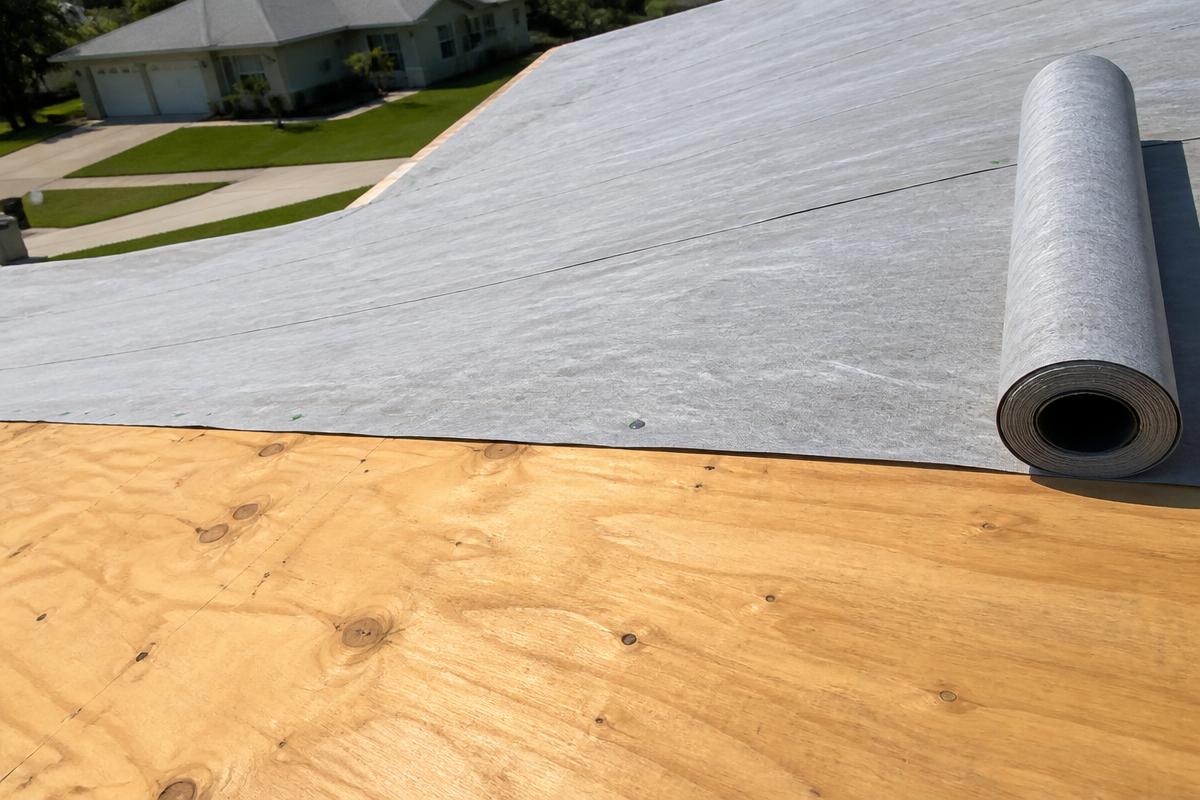
- Underlayment — the water-resistant layer between the deck and the covering. It is a meaningful line of defense during wind-driven rain.
- Flashing — metal at walls, valleys, chimneys, skylights and other transitions. Many leaks that look like a covering problem are really a flashing problem.
- Roof-to-wall connections — the straps, clips or other connectors tying the roof structure to the walls.
- Drainage — slope, valleys, gutters and downspouts moving water off and away from the home.
- Ventilation — ridge vents, soffit vents and other components that move air through the attic space.
- Penetrations — plumbing boots, vents, exhaust and anything else passing through the roof surface, each sealed and flashed individually.
When you compare proposals later, it helps to remember that two contractors can quote the same shingle and still be quoting very different systems underneath it.
When Should a Roof Be Replaced?
There is no single number of years that makes a Florida roof due for replacement. Actual service life varies with the roofing material, the quality of the original installation, sun and storm exposure, ventilation, maintenance history and prior repairs. Age matters, but age combined with condition is what contractors and inspectors actually evaluate.
Signs that a roof deserves a closer look include:
- Active leaks, or ceiling and wall staining that returns after rain.
- Missing, cracked, curling or displaced shingles or tiles.
- Deteriorated, rusted or improperly sealed flashing at walls, valleys and penetrations.
- Soft or sagging areas that may indicate damaged decking.
- Granule loss collecting in gutters on an asphalt shingle roof.
- Damage following a named storm, hail or falling limbs.
- Repeated repairs in different areas rather than one isolated spot.
- Findings from a roof inspection, a wind mitigation inspection or an insurance review.
An older roof in good, well-maintained condition may still have useful life. A newer roof with an installation defect may not. A written evaluation from a licensed contractor — ideally more than one — is worth more than any rule of thumb.
Florida Roofing Materials
Several roofing systems are common on Florida homes. None of them is universally best; each trades off cost, weight, appearance, maintenance and repairability differently, and the right answer depends on your structure, your neighborhood and your budget.
- Asphalt shingles — the most common residential covering. Widely available, comparatively economical, straightforward to install and repair. Architectural shingles are heavier and more dimensional than three-tab. Performance depends heavily on the fastening pattern and underlayment beneath.
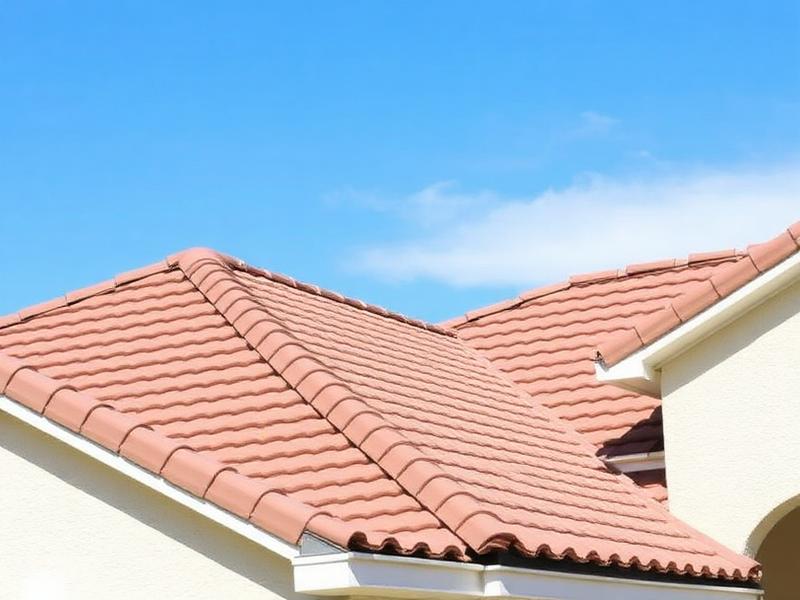
- Concrete and clay tile — long associated with Florida architecture. Durable and resistant to sun and rot, but significantly heavier, so the structure must be able to carry the load. Individual tiles can be replaced, though matching discontinued profiles and colors can be difficult.
- Metal roofing — standing-seam and exposed-fastener panels. Light relative to tile, sheds water well and often installs quickly. Panel gauge, coating, fastening method and flashing detail vary a lot between products and installers.
- Low-slope and flat systems — modified bitumen, single-ply membranes and similar assemblies used on additions, porches and flat sections. These are a different trade discipline from steep-slope roofing; make sure whoever quotes your home is quoting the right system for each area.
Many Florida homes combine systems — tile on the main structure with a membrane over a flat porch, for example. Ask any contractor to state, in writing, which system is proposed for each area of the roof.
Repair or Replace?
Not every problem calls for a full replacement, and not every roof can be responsibly patched. Contractors generally weigh the same set of factors:
- How much of the roof is affected — one isolated area versus damage spread across multiple slopes.
- The overall condition and remaining life of the existing covering.
- Whether matching material is still available, and how a patch will look next to weathered surfaces.
- Whether water has already reached the underlayment or the deck.
- The condition of the decking once anything is opened up.
- Code and permitting considerations that may apply depending on the scope of work and your jurisdiction.
- The economics of repeated repairs against the cost of replacing the system once.
A repair that keeps a sound roof in service is a legitimate outcome. So is a recommendation to replace. What you should expect either way is a written explanation of what was observed and why the recommendation follows from it — not a verdict without findings.
Roofing and Hurricane Wind Mitigation
Wind mitigation refers to specific construction features that affect how a home is expected to perform in high wind. In Florida these features are commonly documented during a wind mitigation inspection, and several of them relate directly to the roof.
- Roof deck attachment — how the sheathing is fastened to the structure below it.
- Roof-to-wall connections — the straps, clips or connectors joining the roof framing to the walls.
- Roof geometry — the overall shape of the roof, such as hip versus gable, which is a characteristic of the existing structure rather than something a re-roof typically changes.
- Secondary water resistance — an additional barrier intended to slow water intrusion if the covering is lost.
- Opening protection — windows, doors and other openings, which are evaluated separately from the roof but are part of the same overall picture. See our guide to impact windows and doors for that side of the project.
It is worth being precise here: replacing a roof and making wind-mitigation improvements are related but not the same thing. A re-roof is an opportunity to address some of these features because the covering is already off, but a new roof does not automatically mean a particular mitigation feature was added, documented or credited. Any insurance effect is determined solely by your insurer, your policy and your inspection documentation — no contractor or matching service can promise a discount, a credit or a grant.
Roof Deck Attachment
The roof deck is the sheathing — typically plywood or OSB panels — fastened across the trusses or rafters to form the surface everything else is installed on. In high wind, uplift pressure pulls upward on that surface. How well the deck is attached is therefore one of the more consequential things about a roof, and it is entirely hidden once the covering is on.
Because a re-roof exposes the deck, it is a natural moment to evaluate the existing fastening, replace deteriorated panels and address what an inspection identifies. Whether any particular attachment work is required, recommended or practical on your home is a determination for a licensed contractor, your local building department and, where relevant, a qualified inspector or design professional. Nothing on this page is structural guidance for a specific property.
Roof-to-Wall Connections
Roof-to-wall connections are the metal straps, clips and connectors that tie the roof framing to the walls of the home. Homeowners often hear them called hurricane straps or hurricane clips. Their purpose is to resist the uplift and lateral forces a storm places on the roof structure.
What exists in your home depends on when and how it was built. Evaluating those connections usually requires access — often from the attic — and interpreting what is found is work for a licensed contractor or qualified inspector, not something to assess from the ground.
Upgrading connections is possible in some homes and impractical or disproportionately expensive in others, depending on construction type, attic access and existing conditions. Treat any blanket claim that connections can always be improved during a re-roof with skepticism, and never modify structural connections yourself.
Secondary Water Resistance
Secondary water resistance describes an additional barrier applied to the roof deck, beneath the primary covering, intended to slow water from entering the home if that covering is damaged or lost during a storm. Depending on the assembly, it may involve a self-adhering membrane over the deck or sealing at the panel joints.
It is one of the items commonly documented on a Florida wind mitigation inspection, which is why the term surfaces in roofing conversations, insurance discussions and program paperwork. It is not waterproofing and it does not make a roof storm-proof — it is a secondary layer with a specific, limited purpose.
If secondary water resistance matters to you, ask whether it is included in the proposed scope, what specific product or method is being used, and how it will be documented when the project is finished. Whether any of it is recognized on an inspection form is determined by the inspector and the applicable requirements, not by the contractor's description.
Permitting and Inspections
Roofing work in Florida generally requires a permit, and inspections are typically part of the process. The specifics — what is required, when inspections happen and what documentation closes the job — are set by your local building department and vary by jurisdiction and by the scope of the work. Confirm the requirements that apply to your property before work begins.
A typical project moves through something close to this sequence:
- Contractor assessment of the existing roof, decking access and any problem areas.
- A written proposal describing the system, materials and scope.
- Permit application and issuance where required, normally handled by the contractor.
- Material delivery and property protection — landscaping, pool cages, driveways, vehicles.
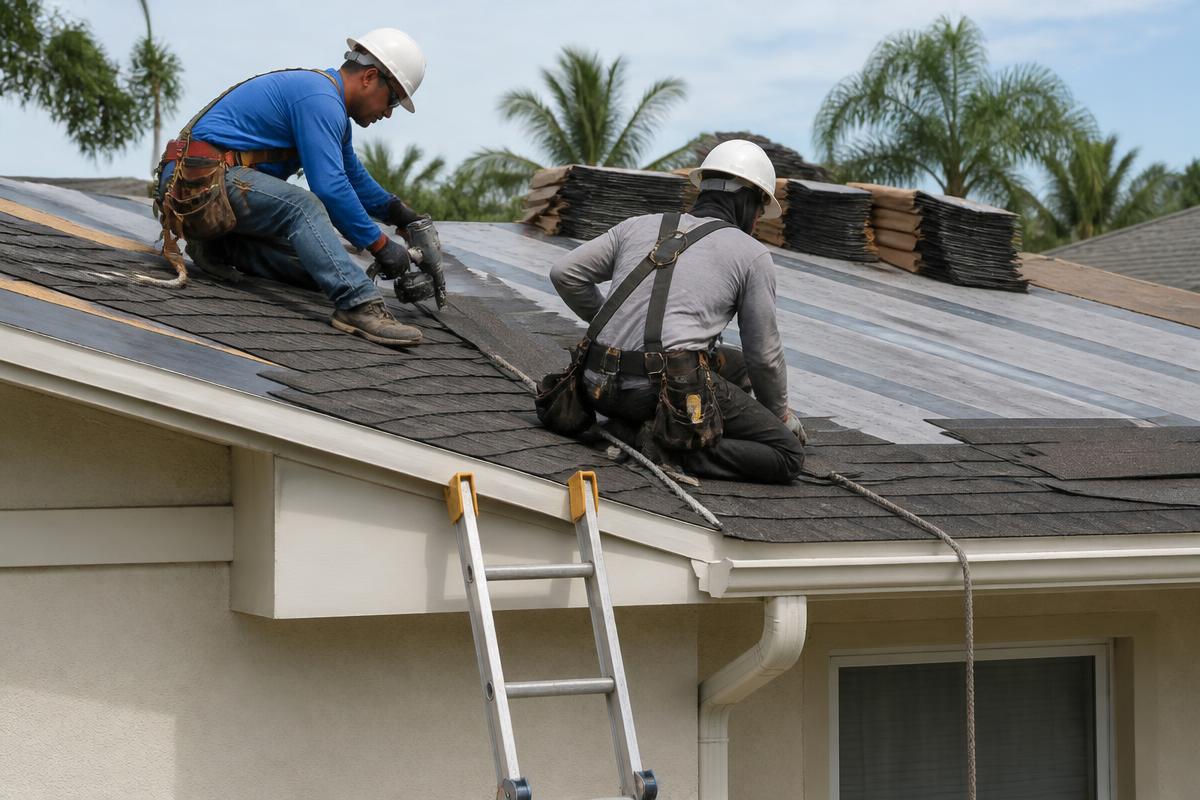
- Removal of the existing covering as applicable, down to the deck.
- Deck inspection and repair or replacement of deteriorated sheathing, at agreed rates.
- Installation of underlayment, flashing, the roofing system and any ventilation components.
- Required inspections, which may occur at intermediate stages as well as at completion.
- Final cleanup, disposal, and delivery of documentation and warranty paperwork.
Ask who is pulling the permit. A contractor asking a homeowner to pull their own permit for work the contractor is performing is a reason to slow down and ask why.
What Affects Roofing Project Cost
We do not publish price ranges, because a credible number depends on your specific roof and current material and labor conditions. What we can do is explain what actually moves the number, so a proposal makes sense when you read it:
- Roof size, measured in squares rather than the square footage of the house.
- Geometry and pitch — valleys, hips, dormers and steep slopes add labor and material waste.
- The roofing system selected, and the weight and handling it requires.
- Tear-off of existing layers, including how many layers are present.
- Deck repair or replacement discovered after tear-off.
- Underlayment type and any secondary water resistance included.
- Flashing, drip edge, vents and other metal components being replaced.
- Site access — height, tight lots, landscaping and where materials can be staged.
- Permit fees and inspection requirements in your jurisdiction.
- Labor, crew size and current scheduling demand, which spikes after major storms.
- Any structural or wind-mitigation work included in the scope.
- Disposal of old materials, and overall project complexity.
Choosing a Florida Roofing Contractor
The contractor matters at least as much as the material. Before you sign anything, verify the basics yourself rather than relying on what appears on a business card or a truck.
- License — confirm the company is appropriately licensed in Florida for roofing work, and that the license is active. You can look up a license through the Florida DBPR license search.
- Insurance — request current certificates for general liability and workers' compensation, issued directly to you by the insurer or agent.
- Written scope — every component, not just the shingle brand.
- System and manufacturer — the specific product line, and any approval documentation applicable to the assembly. Florida evaluates building products used in construction; you can search approvals through the Florida Product Approval system.
- Permit responsibility — who applies, who pays and who schedules inspections.
- Deck repair provisions — a stated per-sheet or per-foot rate agreed in advance, so a discovery after tear-off is not an open-ended cost.
- Change orders — how additional work is documented, priced and approved before it proceeds.
- Payment schedule — tied to milestones. Be cautious of large deposits before materials are delivered or a permit is issued.
- Warranty — the manufacturer's product warranty and the contractor's workmanship warranty are separate documents with different terms.
- Cleanup and disposal — debris removal, magnet sweeps for nails and who is responsible for landscaping damage.
- Final documentation — permit closed, inspections passed, warranty paperwork and photos delivered to you.
Understanding a Roofing Proposal
Roofing estimates are notoriously hard to compare, because the visible number is a summary of decisions buried in the scope. Two bids that differ by thousands may simply be describing different projects. Read every proposal for the same line items:
- Roofing system and specific product, including color and profile.
- Tear-off: how many existing layers are included, and what happens if more are found.
- Underlayment type, and whether secondary water resistance is included.
- Flashing: which pieces are being replaced versus reused.
- Deck repair: the allowance included and the unit rate beyond it.
- Ventilation components being installed or replaced.
- Permit fees — included or billed separately.
- Disposal and dumpster costs.
- Labor and the projected schedule.
- Warranty terms, both manufacturer and workmanship.
- Payment schedule and deposit.
- Exclusions — often the most revealing section in the entire document.
The lowest price is not the lowest price if the scope is smaller. If one proposal excludes flashing replacement and includes a two-sheet deck allowance while another includes new flashing throughout and ten sheets, you are not looking at the same project. Ask each contractor to price the same scope, then compare.
The same scope-to-scope discipline applies to interior work. If your roof project is part of a larger renovation, our guide to home remodeling for Florida homeowners covers allowances, change orders and contracts in more detail.
Questions to Ask Before You Sign
- What roofing system, exactly, are you proposing, and why for my home?
- What underlayment is included, and is secondary water resistance part of the scope?
- How are unforeseen deck repairs handled, and at what rate?
- Who obtains the permit, and who schedules the inspections?
- Which flashing is being replaced, and which is being reused?
- What manufacturer and product line is specified in writing?
- What warranties apply, from whom, for how long, and are they transferable?
- What is the payment schedule, and what is due before work begins?
- How will my landscaping, pool cage, driveway and vehicles be protected?
- Who handles debris removal and nail cleanup, and when?
- Is the crew employed by your company or subcontracted, and who supervises on site?
- What documentation will I receive when the project closes?
Roofing and My Safe Florida Home
My Safe Florida Home is a state program administered by the Florida Department of Financial Services that has offered free home inspections and, at times, matching grant funding toward certain hurricane-hardening improvements for eligible single-family homes.
Some of the wind-mitigation improvements associated with roofing — such as roof deck attachment, roof-to-wall connections and secondary water resistance — fall into the categories of hardening work that homeowners research alongside the program. However, eligibility and qualifying improvements depend on current program requirements, the recommendations of an inspection, funding availability and official approval. An ordinary roof replacement does not automatically qualify for anything.
Program details change over time, so we intentionally do not restate current amounts, deadlines or eligibility rules here. Check the official program site before making a decision based on the program.
Official My Safe Florida Home program website
Florida Safe Home is an independent contractor-matching platform and is not affiliated with, endorsed by, or operated by the Florida Department of Financial Services or the My Safe Florida Home Program. Information on this page is general education, not legal, insurance or code advice.
Questions Florida Homeowners Ask
How do I know if my Florida roof needs replacement?
Look at condition rather than age alone: recurring leaks, missing or damaged material, deteriorated flashing, soft decking and repeated repairs across different areas are the signals that matter. A written evaluation from a licensed contractor, and ideally a second opinion, is the reliable way to decide.
What roofing material is best for a Florida home?
There is no universal best. Asphalt shingle, tile, metal and low-slope membrane systems each trade off cost, weight, appearance, maintenance and repairability differently, and your structure has to be able to carry the system you choose. The right answer is specific to your home and budget.
Does a new roof automatically improve hurricane protection?
Not automatically. A re-roof is a good opportunity to address wind-mitigation features because the deck is exposed, but a new covering by itself does not mean deck attachment, roof-to-wall connections or secondary water resistance were improved or documented. Those have to be in the scope.
What is roof deck attachment?
It refers to how the roof sheathing — the plywood or OSB surface under everything else — is fastened to the trusses or rafters. It matters because high wind creates uplift pressure on that surface, and it is hidden from view once the roof covering is on.
What is a roof-to-wall connection?
It is the metal strap, clip or connector tying the roof framing to the walls, often called a hurricane strap or clip. What your home has depends on how and when it was built, and evaluating it usually requires attic access and a qualified professional.
What is secondary water resistance?
It is an additional barrier on the roof deck, beneath the covering, intended to slow water intrusion if the covering is damaged during a storm. It is a limited secondary layer, not waterproofing, and it is one of the items documented on a Florida wind mitigation inspection.
Do I need a permit to replace my roof in Florida?
Roofing work generally requires a permit, and inspections are typically part of the process. The exact requirements are set by your local building department and vary by jurisdiction and scope, so confirm what applies to your property. Normally the contractor pulls the permit.
How should I compare roofing estimates?
Compare scopes, not totals. Check the system and product, tear-off layers, underlayment, which flashing is replaced, the deck-repair allowance and unit rate, ventilation, permit, disposal, warranty, payment schedule and — especially — the exclusions. A lower price on a smaller scope is not a better deal.
Can Florida Safe Home determine whether my roofing project qualifies for a grant?
No. Florida Safe Home does not determine government-program eligibility, grant approval, reimbursement or qualifying improvements. Those decisions are made by the applicable government program authorities under their current rules. We connect homeowners with contractors; program questions belong to the program.
Official sources
The official references used when reviewing this page. Requirements change, so check the source directly for the current details.
- Florida Product Approval search
Look up state approval records for windows, doors, roofing and other building products.
- Florida DBPR license verification
Search the state licensing record for a contractor before you hire.
- My Safe Florida Home
The state program’s own site for eligibility, inspections and grant details.
- Florida OIR wind mitigation resources
State insurance regulator guidance on wind mitigation features and inspections.
- Uniform Mitigation Verification Inspection Form (OIR-B1-1802)
The standard state form used to document wind mitigation features.
- Florida DFS — mitigation notices, inspections and forms
State consumer services guidance on mitigation inspections and insurance paperwork.
Need a Roofing Contractor?
Tell us about your roof and your home. Florida Safe Home reviews your details and works to connect you with contractors in our network based on project type, service area, project needs and availability. Free for homeowners, with no obligation.
Get Matched With a Roofing Contractor