
Impact Windows & Doors for Florida Homeowners
Impact-rated windows and doors are one of the most common ways Florida homeowners strengthen a house against wind and wind-borne debris. This guide explains how these systems work, how Florida product approval and permitting generally fit in, what to look for in a proposal, and which factors drive project cost — in plain language, without sales pressure.
Get Matched With a ContractorFree for homeowners.
Published and reviewed by Florida Safe HomeLast reviewed
What Impact Windows and Doors Actually Are
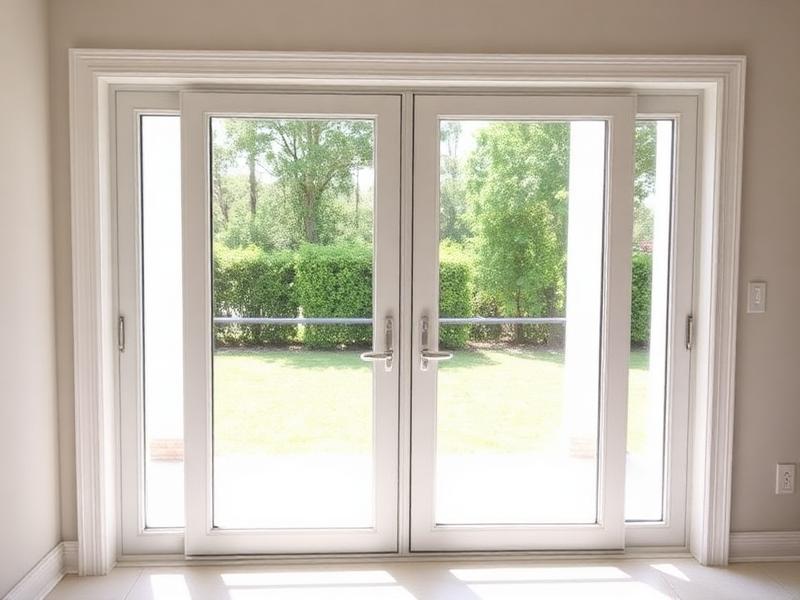
An impact window or door is built to resist breaking apart when something strikes it during a storm. The core of most products is laminated glass: two panes of glass permanently bonded to a clear interlayer. If the glass is struck hard enough to crack, the interlayer is designed to hold the broken pieces in place so the opening stays covered rather than opening the home's interior to wind and rain.
Glass alone is only part of the picture. Performance depends on the complete system — the glass, the frame, the fasteners and the way the unit is anchored into the wall. A product is generally evaluated and approved as an assembly, which is why installation detail matters as much as the product on the truck.
The word "impact" on a brochure does not by itself mean a product is approved or appropriate for a specific home. Approval depends on the exact product, the opening, the wind-load conditions at that address and the requirements the local building department applies.
Why Florida Homeowners Consider Impact Protection
Homeowners weigh impact windows and doors for different reasons, and the balance is personal. Common motivations include:
- Keeping openings protected without putting up panels or shutters before every storm.
- Replacing original windows that are aging, leaking, difficult to operate or no longer sealing well.
- Meeting requirements that may apply when replacing windows or doors, which vary by location and scope.
- Interest in secondary benefits some products may offer, such as reduced outside noise or improved energy performance — these vary by product and home and are not guaranteed.
- Wanting documentation for an insurance wind-mitigation inspection, understanding that any premium effect is determined by the insurer, not the contractor.
No product eliminates storm risk, and impact protection is not required for every Florida home or every project. Whether it makes sense depends on the house, the location, the condition of the existing openings and the homeowner's priorities.
Common Window Configurations
Most Florida replacement projects use a handful of window styles. The style affects price, ventilation, view and how the unit performs when closed.
- Single hung — the bottom sash slides up. The most common and usually the most economical replacement style.
- Horizontal roller (slider) — one or more sashes slide sideways. Common for wider openings.
- Casement — hinged at the side and cranked open. Good ventilation and a tight seal when closed.
- Awning — hinged at the top. Often used above other windows or in bathrooms.
- Fixed / picture — does not open. Often the least expensive per square foot, but provides no ventilation and may affect egress planning.
- Architectural shapes — arches, octagons and custom geometry. These are typically special-order and add lead time and cost.
Entry Doors and Sliding Glass Doors
Doors are frequently the largest and most complex openings in a Florida home, and they are often the most expensive part of a project.
Impact entry doors are supplied as a complete unit — slab, frame, threshold and hardware. Replacing just the slab in an existing frame generally does not produce an approved impact assembly.
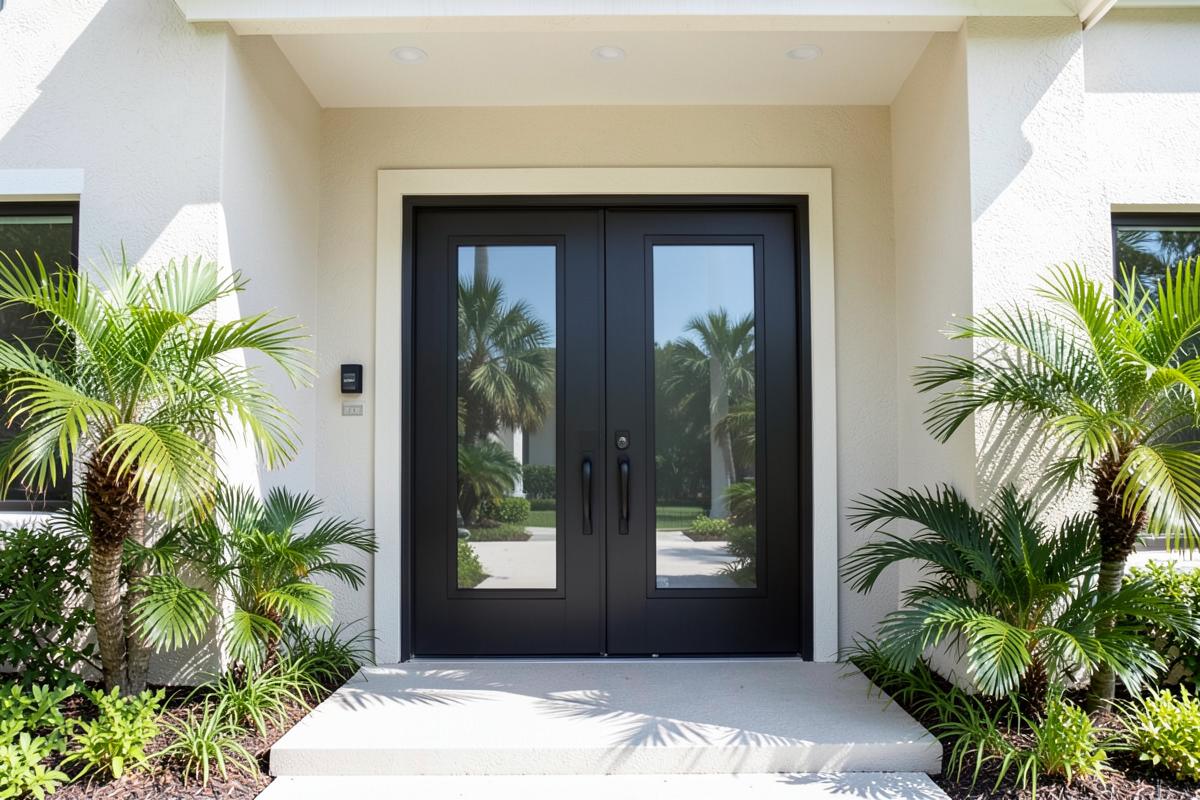
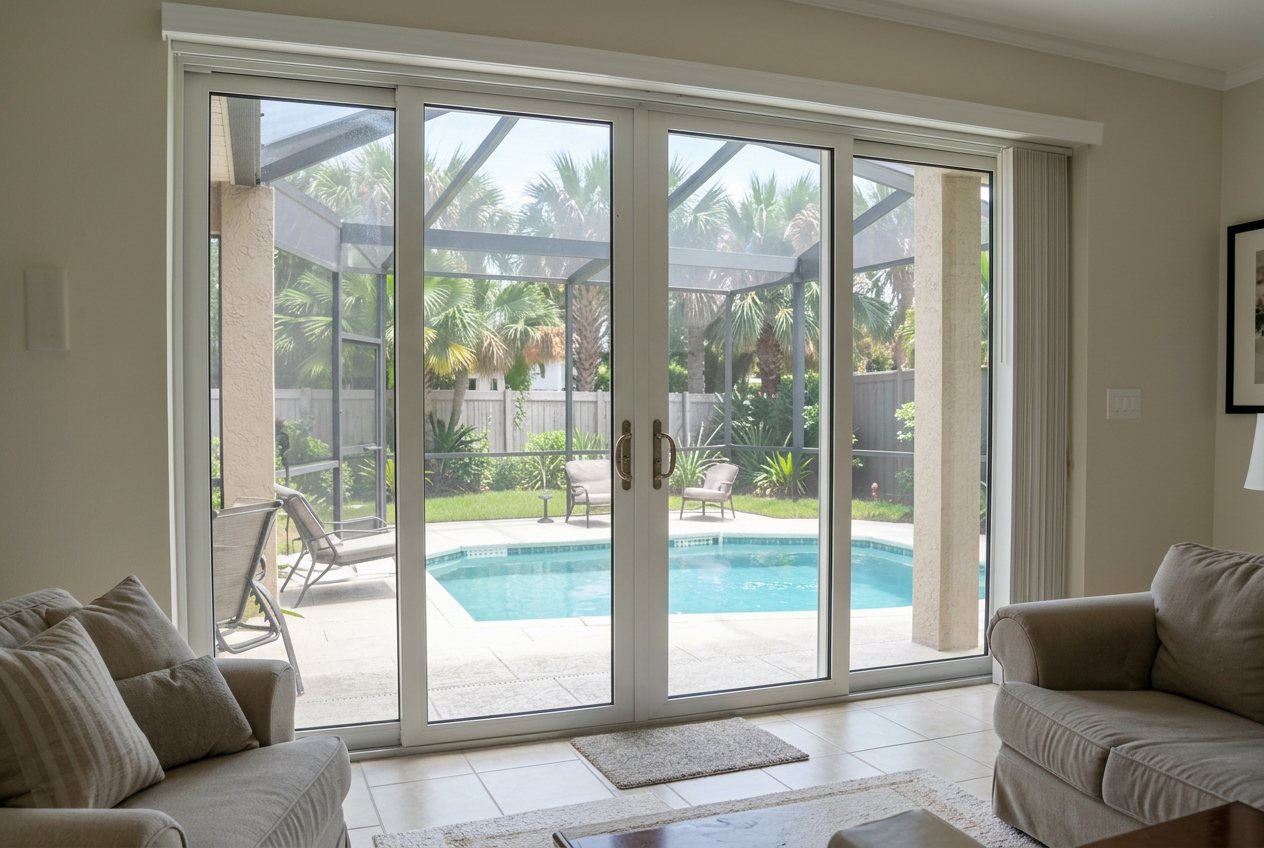
Impact sliding glass doors use large laminated panels in a reinforced frame and track. Because of their size and weight, they usually require careful measurement, structural attention at the opening and, in many cases, more than two installers. Multi-panel and pocketing configurations add complexity and lead time.
French doors, garage-entry doors and door sidelites each carry their own approval documentation. Ask which specific units in your proposal are impact-rated and which are not — mixed projects are common and should be spelled out.
Impact Products vs. Shutters and Panels
Impact windows and doors are not the only way to protect openings. Approved shutter systems — accordion, roll-down, Bahama, colonial and removable panels — are also widely used in Florida, and many homes use a mix.
- Impact units are always in place and require no action before a storm, but they replace the window or door itself, so the project cost is higher.
- Shutters generally cost less per opening and can protect existing windows, but they must be deployed before a storm and stored the rest of the year.
- Roll-down and motorized shutters reduce the deployment effort, at higher cost and with hardware that needs maintenance.
- Plywood is a last-resort measure, not an approved protection system, and it is not a substitute for either option above.
Either approach must be an approved system for the opening. Comparing an impact quote to a shutter quote is reasonable — comparing either to unapproved materials is not. Openings are also only one part of a home's storm picture; if the roof is aging or was damaged, see our guide to roofing for Florida homeowners.
Florida Product Approval and HVHZ, at a High Level
Florida evaluates building products used in construction, and impact-rated windows and doors are typically identified by an approval number tied to a specific product, configuration and set of tested conditions. Two systems are commonly referenced:
- Florida Product Approval — statewide approvals published through the Florida Building Commission's product approval system.
- High-Velocity Hurricane Zone (HVHZ) — a stricter set of requirements that applies in Miami-Dade and Broward counties. Products for HVHZ work are commonly identified by a local Notice of Acceptance. Most of Florida is not in the HVHZ, so HVHZ documentation is not required everywhere.
Approval documentation is product-specific and condition-specific. A product approved for one opening size, pressure or installation method is not automatically approved for another. Your contractor and the local building department confirm what applies to your address and your openings.
You can verify approvals yourself through the official state resources: Florida Building Commission Product Approval search.
Permitting and Inspections
Window and door replacement in Florida is generally permitted work, but requirements are set locally and are not identical everywhere. A typical sequence looks like this:
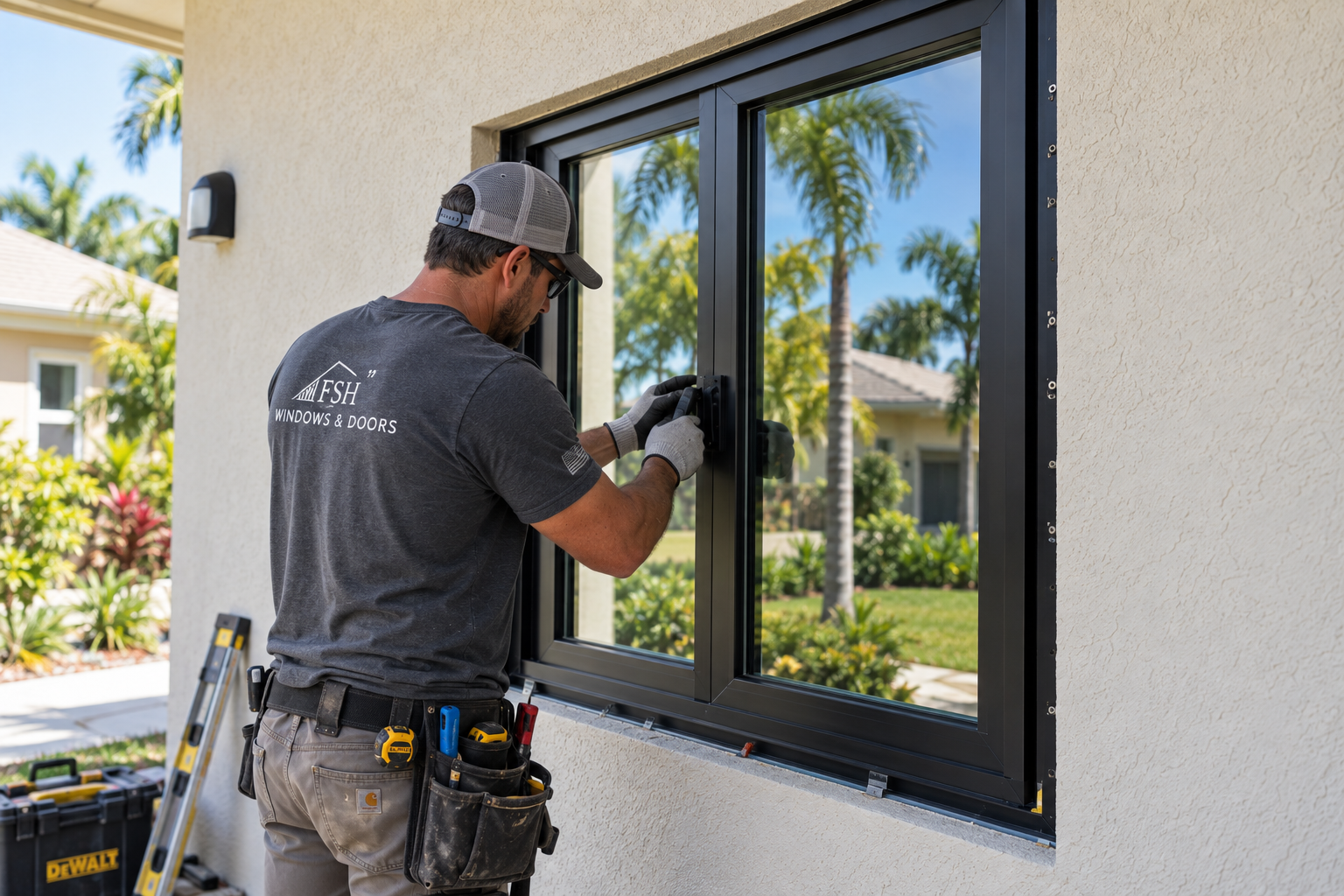
- Field measurement of every opening, since standard sizes rarely match an existing house exactly.
- Permit application, usually including the product approval documents and the attachment details for your wind-load conditions.
- Manufacturing lead time, which for special-order impact units is often measured in weeks.
- Installation, including removal of the old unit, anchoring the new unit and sealing the perimeter.
- Inspection by the local building department, and closing the permit once it passes.
Ask who pulls the permit. A permit pulled in the homeowner's name rather than the contractor's shifts responsibility in ways many homeowners do not intend. Also confirm that the contractor closes the permit — an open permit can surface later when the home is sold or insured.
Homeowners associations, condominium associations and historic districts may add their own approval step on top of the building permit.
What Drives the Cost of a Project
Impact window and door projects vary widely, and any single price quoted online is unlikely to reflect your home. The factors that move a real quote are:
- Number of openings and their total square footage — the biggest single driver.
- Sizes and configurations: large sliders and architectural shapes cost far more per opening than small single hungs.
- Frame material — commonly aluminum or vinyl, each with different cost and performance characteristics.
- Glass options such as tint, low-E coatings, obscure glass and grid patterns.
- The wind-load requirements at your address, which affect which products and attachments qualify.
- Condition of the existing openings: rotted or damaged framing, stucco repair and out-of-square openings add labor.
- Whether the opening is being changed in size, which introduces structural work.
- Access — second-story or hard-to-reach openings take longer and may need lifts.
- Permit fees, engineering when required, and finish work such as stucco, drywall and paint.
- Whether interior or exterior finish restoration is included or excluded in the quote.
We do not publish price ranges here because a range that is accurate for a small three-window job is misleading for a whole-home project, and the reverse is also true. The reliable way to learn your number is written proposals on your actual openings.
Comparing Proposals Line by Line
Two quotes for "impact windows" can describe very different projects. When you compare, look for:
- An opening-by-opening list with size, style and the specific product for each — not a single lump sum.
- The product approval number for each product being installed.
- Whether permit fees, engineering and inspection coordination are included.
- Whether stucco, drywall, trim, paint and debris removal are included or excluded.
- Payment schedule and deposit amount, and what each payment corresponds to.
- Estimated lead time and installation duration, stated separately.
- What happens if an opening is found to be damaged once the old unit comes out.
- Total price, and any financing terms presented alongside it.
Be cautious with pricing that is only available "today," with proposals that will not identify products, and with pressure to sign before you have the written scope in hand.
Verifying the Contractor
In Florida, contracting work of this type is generally performed under a state or registered license, and license categories differ. You can look up a license holder through the Florida Department of Business and Professional Regulation: DBPR license search.
- Confirm the license is active and that the name on it matches the company on your contract.
- Ask for a certificate of general liability insurance, and workers' compensation coverage or a valid exemption.
- Confirm the company — not the homeowner — is pulling the permit.
- Ask whether crews are employees or subcontractors, and who is on site the day of installation.
- Ask for recent local references on similar openings.
Warranties, Insurance and Documentation
There are usually two separate warranties: the manufacturer's warranty on the product itself, and the contractor's workmanship warranty on the installation. They have different lengths and different terms, and a leak is often a workmanship question rather than a product one. Get both in writing, and ask whether the manufacturer warranty is transferable if you sell the home.
Keep a project folder. It is worth more than most homeowners expect at resale, at insurance renewal and at any future claim:
- The signed contract and final scope.
- Permit number and the closed, passed final inspection.
- Product approval numbers and manufacturer documentation for each unit.
- Both warranty documents.
- Photos of the installed units and of the frame labels.
- Your wind mitigation inspection report, if one is performed after the work.
On insurance: Florida insurers may consider verified opening protection when rating a policy, typically through a wind mitigation inspection. Any effect on your premium is determined solely by your insurer and your policy — no contractor or matching service can promise a discount or a specific amount.
About the My Safe Florida Home Program
My Safe Florida Home is a state program administered by the Florida Department of Financial Services that has offered free home inspections and, at times, matching grant funding toward certain hurricane-hardening improvements for eligible single-family homes.
Program details — including whether applications are open, what funding is available and who qualifies — are set by the state and change over time. We intentionally do not restate current amounts or eligibility rules here. Check the official program site for anything current before you make a decision.
Official My Safe Florida Home program website
Florida Safe Home is an independent contractor-matching platform and is not affiliated with, endorsed by, or operated by the Florida Department of Financial Services or the My Safe Florida Home Program. Information on this page is general education, not legal, insurance or code advice.
Questions Florida Homeowners Ask
Do I have to replace every window at once?
No. Many homeowners phase a project by elevation or by room. Note that partial projects protect only the openings that are replaced, and some insurance considerations look at whether all openings are protected.
How long does a project take?
Manufacturing lead time usually dominates the schedule and is often measured in weeks for special-order units. Installation itself is frequently a few days for a typical home, with the inspection following after.
Will impact windows lower my insurance?
It depends entirely on your insurer, your policy and your wind mitigation inspection. Verified opening protection is one factor insurers may consider, but no discount is guaranteed and no contractor can commit to one on your behalf.
Is impact glass unbreakable?
No. Impact-rated glass can crack. It is designed so the laminated interlayer holds the pieces and keeps the opening covered. No product eliminates storm risk.
Do I need HVHZ-approved products?
Only if your property is in the High-Velocity Hurricane Zone, which covers Miami-Dade and Broward counties. Elsewhere in Florida, the requirements that apply are determined by your wind-load conditions and your local building department.
Can I keep my existing frames?
Sometimes an insert-style installation is possible, but approval and attachment requirements apply to the assembly as installed. Whether a frame can be reused is a site-specific question for your contractor and the building department.
What should I do first?
Count and measure your openings roughly, note which are windows versus doors, and get written itemized proposals from licensed Florida contractors so you are comparing the same scope.
Official sources
The official references used when reviewing this page. Requirements change, so check the source directly for the current details.
- Florida Product Approval search
Look up state approval records for windows, doors, roofing and other building products.
- Florida DBPR license verification
Search the state licensing record for a contractor before you hire.
- My Safe Florida Home
The state program’s own site for eligibility, inspections and grant details.
- FEMA Building Science Resource Library — P-804 wind retrofit guide
Federal guidance on retrofitting homes, including openings, against high winds.
Ready to Get Quotes on Your Openings?
Tell us about your project and your home. Florida Safe Home reviews your details and connects you with contractors in our network. Free for homeowners, with no obligation.
Get Matched With a Contractor