
Electrical for Florida Homeowners
Electrical work is different from most home projects: done well it is invisible for decades, and done poorly it can create shock and fire hazards behind the walls. This guide explains how a home's electrical system is organized, which projects Florida homeowners commonly plan — from panel upgrades to EV chargers — and how to evaluate an electrical contractor. It is education, not instruction: electrical work belongs with qualified professionals.
Get Matched With an Electrical ContractorFree for homeowners.
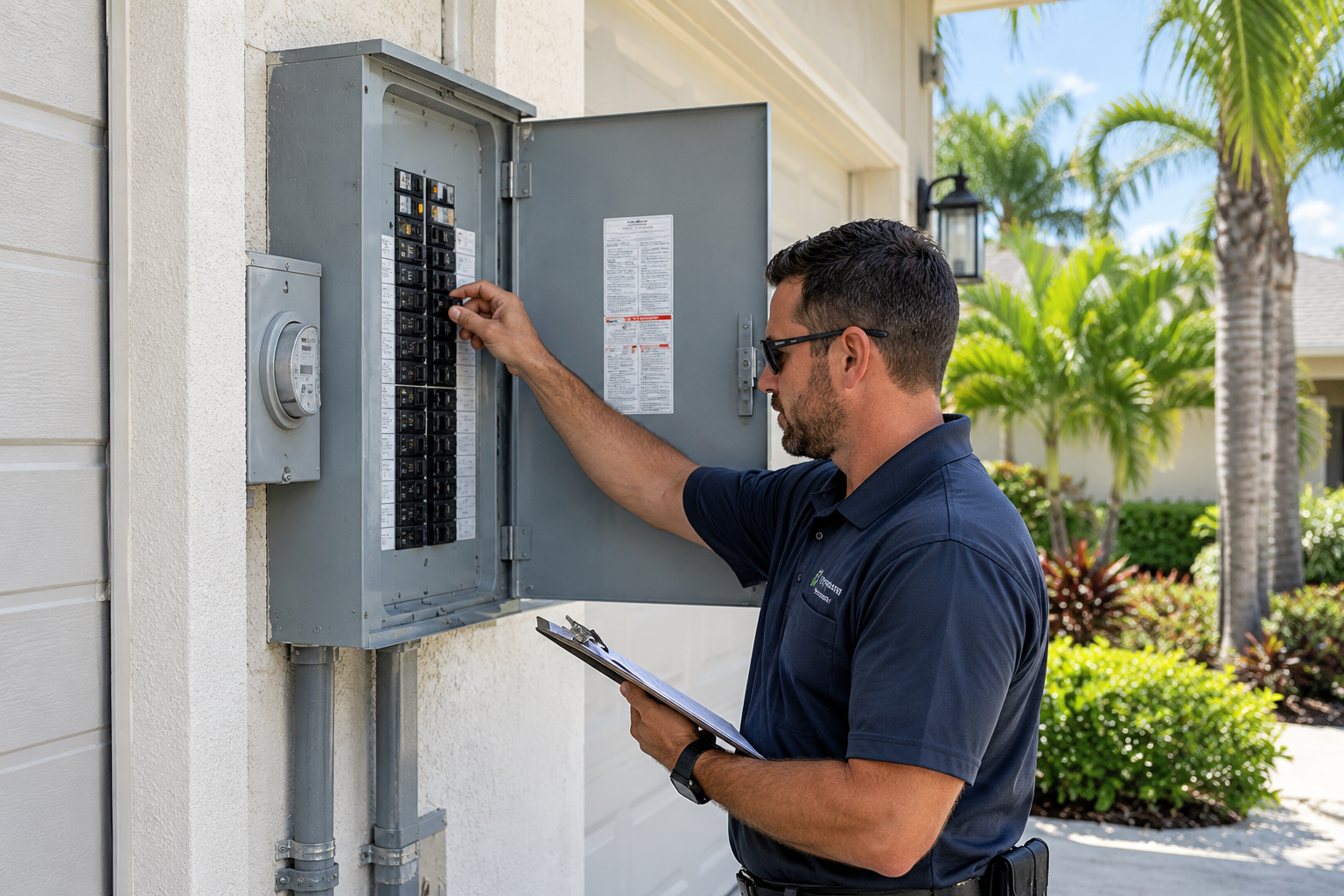
Published and reviewed by Florida Safe HomeLast reviewed
Understanding Your Home's Electrical System
You do not need to know how to work on your electrical system to plan a project intelligently — but a basic map of it makes conversations with contractors much more productive. At a high level, every home has the same chain of equipment:
- Service and meter — power arrives from the utility, passes through the meter, and enters the home's service equipment.
- Electrical panel — the distribution point that divides incoming power into individual circuits and protects each one with a breaker.
- Circuits — the wiring runs that carry power to outlets, switches, lighting and fixed appliances throughout the home.
- Grounding and protection — the safety layer: grounding, bonding and protective devices designed to reduce shock and fire risk.
When a contractor talks about capacity, they are usually describing how much the service and panel can support relative to everything the home runs — air conditioning, water heating, cooking, laundry and anything new you want to add. Whether your specific home has room for a new load is an evaluation, not a rule of thumb.
Common Residential Electrical Projects
Residential electrical work ranges from a single added outlet to a whole-home rewiring. The projects Florida homeowners most often plan include:
- Electrical panel replacement or service upgrades.
- Adding or relocating outlets, switches and lighting.
- Dedicated circuits for major appliances and equipment.
- Ceiling fan and fixture installation.
- Wiring or rewiring during renovation of older homes.
- Outdoor and landscape electrical work.
- Surge protection and backup-power equipment.
- EV charger installation.
- Smart-home switches, controls and monitoring.
Some of these are small service calls; others involve permits, inspections and coordination with the utility. The sections below walk through the larger categories.
Signs Your Electrical System Should Be Professionally Evaluated
Electrical problems often announce themselves quietly before they become dangerous. The following signs are reasons to contact an appropriately qualified electrical contractor for an evaluation — not to investigate inside panels or wiring yourself:
- Breakers that trip repeatedly, especially on the same circuit.
- Burning or unusual odors near outlets, switches, fixtures or the panel.
- Outlets, switches or a panel that feel unusually warm.
- Sparking, buzzing or crackling from electrical equipment.
- Lights that flicker or dim when appliances start.
- Discolored, damaged or loose outlets and switches.
- Two-prong ungrounded outlets throughout an older home.
- A panel or wiring approach that predates modern safety expectations.
Electrical work involves serious shock, fire and arc hazards. This page deliberately does not explain how to open panels, replace breakers, alter wiring, bypass safety devices or test energized equipment. The right response to a concerning sign is a professional evaluation, and if you suspect an immediate hazard — smoke, burning smell, visible damage — treat it as urgent and keep people away from the area.
Electrical Panels and Service Equipment
The panel is the heart of the system. It distributes power to every circuit and its breakers are the first line of protection when something goes wrong on a circuit. Homeowners usually start thinking about the panel in one of three situations: the home needs capacity it does not have, the existing equipment is aging or damaged, or a remodel or addition changes the home's electrical demands.
Whether a panel should be repaired, replaced or upgraded — and whether the service feeding it needs to change at the same time — depends on the home's existing equipment, its loads and the utility's requirements. There is no universal age or size at which replacement becomes mandatory. What matters is the condition and capacity of your specific installation, which is exactly what a licensed electrical contractor evaluates before recommending anything.
- Ask the contractor to explain the condition findings behind a replacement recommendation.
- Ask whether the utility needs to be involved and who coordinates that.
- Confirm how long the power will be off and how the household should plan around it.
- Confirm whether a permit and inspection apply to the proposed scope in your jurisdiction.
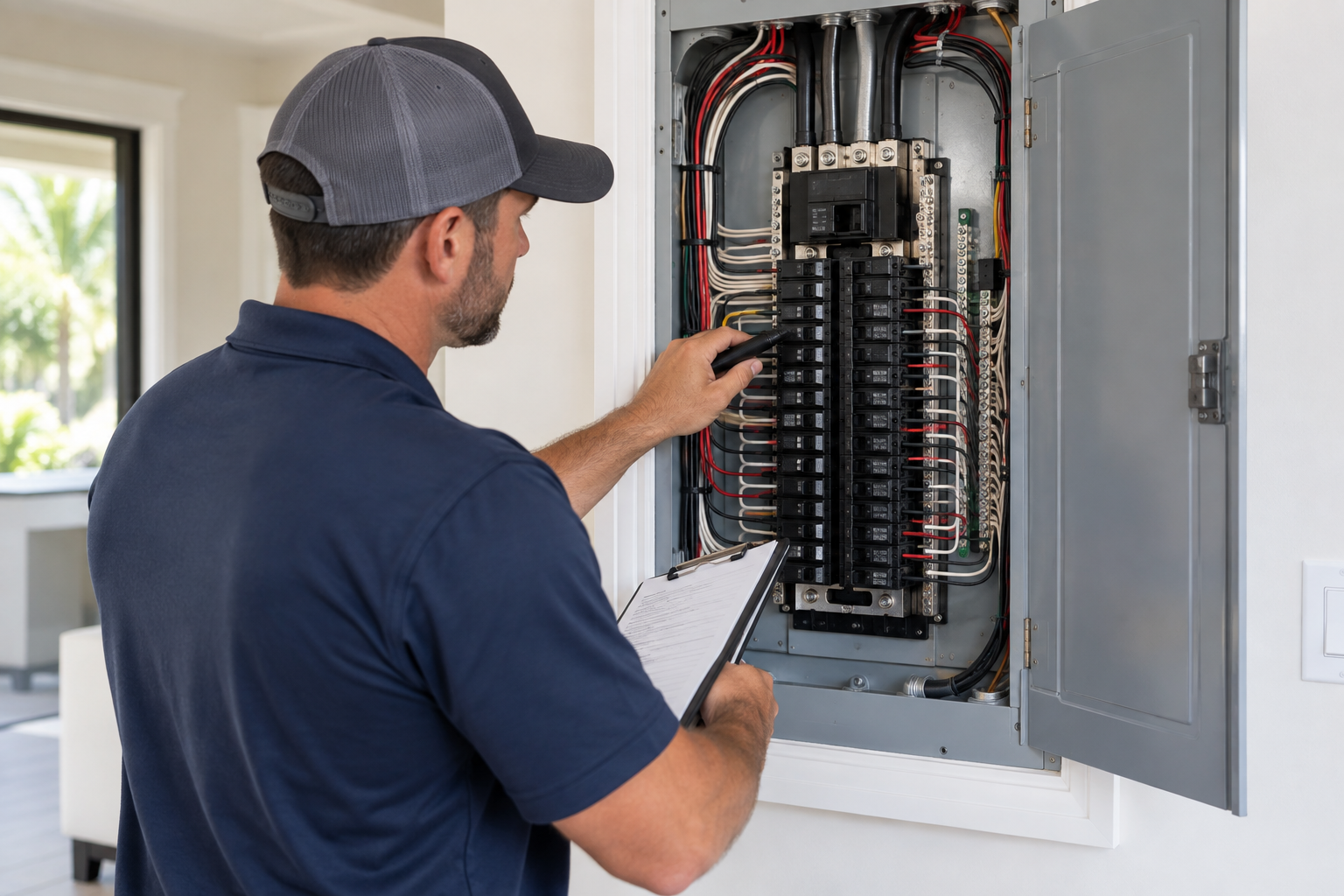
Wiring, Rewiring and Older Homes
Many Florida homes were built under very different electrical expectations than today's households create. Older wiring approaches may lack grounding, may not be sized for modern loads, or may simply be reaching the end of their serviceable condition. Rewiring questions usually surface during renovation, after repeated problems, or when an insurer asks about the home's electrical system.
Whole-home rewiring and partial rewiring are very different projects in disruption and cost, and the choice between them depends on what an evaluation actually finds — the type and condition of the existing wiring, where it runs, and how the walls and finishes around it will be handled. It is reasonable to ask a contractor to show you the evidence behind a rewiring recommendation and to get more than one opinion on a project of that size.
Outlets, Switches and Lighting Projects
The most visible electrical work in a home is usually the smallest: adding outlets where the household actually needs them, replacing worn switches and dimmers, and lighting projects ranging from a single fixture to a whole-home lighting plan.
- Interior lighting — recessed lighting, pendants, under-cabinet lighting and fixture replacement.
- Exterior lighting — entries, pathways, security and landscape lighting designed for outdoor conditions.
- Controls — dimmers, timers, occupancy sensors and smart switches.
- Protection — modern safety devices such as GFCI and AFCI protection, which a contractor may recommend or which applicable code may require depending on the location and the work being done.
Where specific protective devices are required depends on the location in the home, the scope of work and the code edition your jurisdiction has adopted — your contractor and local building department are the reliable sources for what applies to your project.
Dedicated Circuits and Major Equipment
Large appliances and fixed equipment — air conditioning, water heaters, ranges, dryers, workshop equipment — typically run on dedicated circuits rather than sharing with general outlets. When equipment is replaced or added, its electrical supply is part of the project, and the electrical work is sometimes a separate scope from the equipment installation itself.
This is where trades meet. An air-conditioning replacement can involve electrical work at the outdoor unit and the air handler — our guide to HVAC for Florida homeowners covers the mechanical side. Replacing an electric water heater can raise questions about its circuit and shutoff — our plumbing guide covers the water side. On any project that spans trades, ask each contractor who is responsible for the electrical portion and confirm it is performed by an appropriately qualified contractor.
Electrical Work During Remodeling
Remodeling is when hidden electrical conditions surface: ungrounded wiring, overloaded circuits, prior unpermitted work, or layouts that no longer fit how the space will be used. Kitchens and bathrooms in particular concentrate electrical expectations — more counter outlets, more lighting, more protective devices — and moving walls or fixtures almost always means reworking the wiring behind them.
- Rough-in — wiring placed before walls and ceilings are closed.
- Trim-out — devices, fixtures and plates installed near the end.
- Hidden conditions — discoveries behind walls that change the scope once work begins.
Electrical rough-in is sequenced with framing, plumbing and mechanical work, so it should be planned as part of the overall remodel rather than appended afterward. Our guide to home remodeling in Florida covers how multi-trade scopes are planned and priced.
Outdoor Electrical Systems
Outdoor electrical work in Florida faces heat, humidity, storms and salt air in coastal areas, and equipment intended for interiors does not belong outside. Landscape and security lighting, outdoor outlets, and power to detached structures all need materials and methods suited to exposure.
Electrical work associated with pools and spas is a specialized category with its own safety requirements and should only be handled by contractors qualified for that scope. The same is true for dock and waterfront power where it applies. If your project touches water, say so explicitly when you describe it — it changes who is appropriate for the work.
Surge Protection and Backup Power
Lightning and utility events make surge protection a common Florida conversation. Whole-home surge protective devices are installed at the electrical panel and are designed to reduce the damage voltage spikes can do to appliances and electronics. They are a layer of protection, not a guarantee, and a contractor can explain what a given device is and is not designed to do.
Generators and backup power
After storm season, backup power moves to the top of many homeowners' lists. Options range from portable generators used with appropriate transfer equipment to permanently installed standby generators with automatic transfer switches. The electrical connection between a generator and a home must be done correctly — improper connections can endanger utility workers and damage equipment — and fuel, siting, permitting and utility requirements vary by jurisdiction and by equipment. Treat generator installation as a professional project and ask contractors to explain how the transfer equipment keeps the home and the grid safely separated.
EV Charger Installation
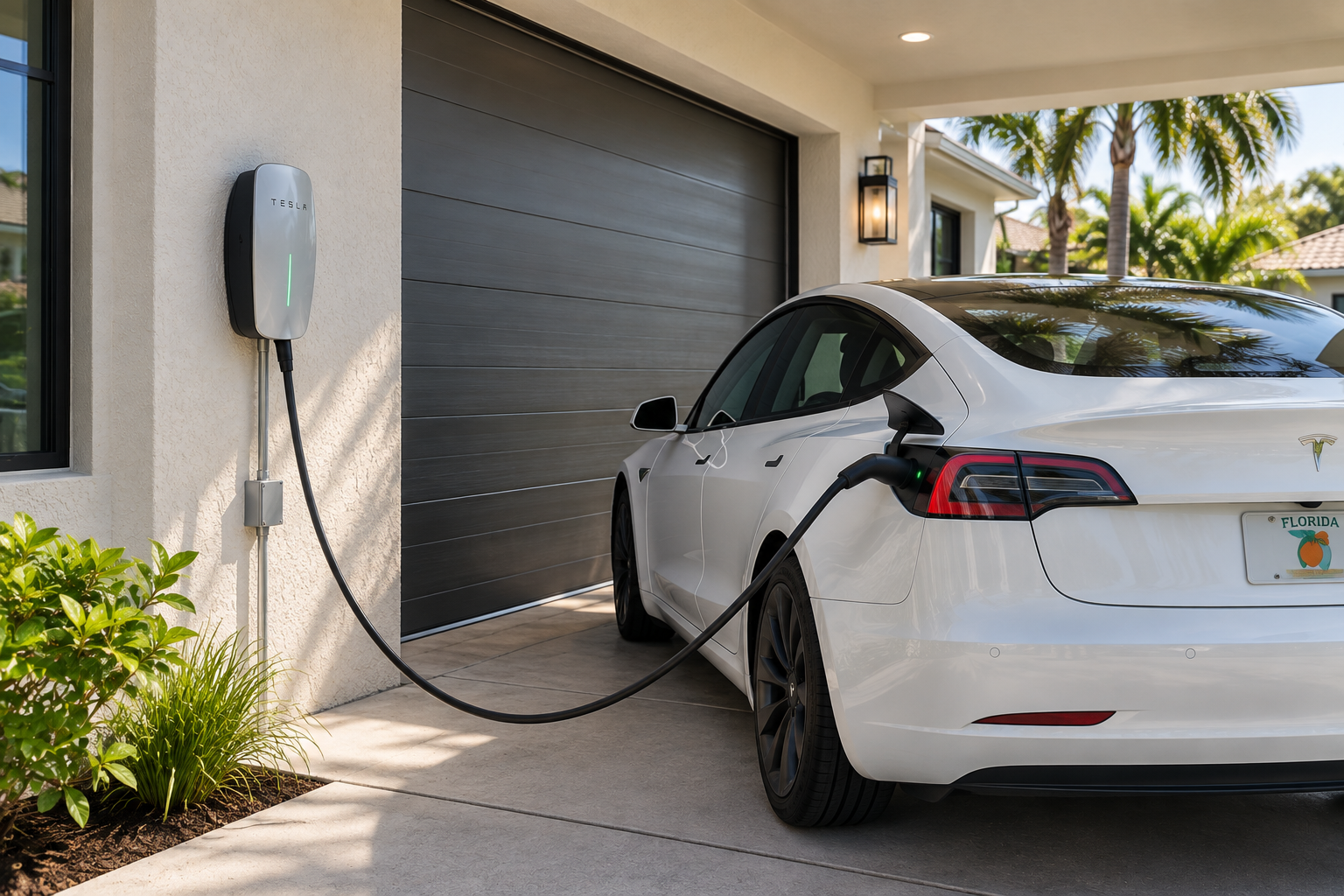
Charging an electric vehicle at home is one of the most common new electrical projects in Florida. The planning questions are straightforward but specific to your home:
- Where the vehicle parks and where the charging equipment will be mounted.
- Whether the home's electrical capacity can support the new load, or whether panel or service changes come first.
- The charging equipment itself, which is typically chosen by the homeowner with the installer's input.
- Permit and inspection requirements, which vary by jurisdiction.
- Any utility programs or requirements that apply at your address.
A contractor should evaluate your specific panel, capacity and routing before quoting — the same vehicle and charger can be a simple installation in one home and a larger project in another.
Smart-Home Electrical Upgrades
Smart switches, dimmers, thermostats, doorbells and energy monitors are often marketed as simple swaps, and some are. But older wiring does not always match what a smart device expects, and larger upgrades — smart panels, whole-home energy monitoring, integrated lighting control — are electrical projects in their own right. If a device you want requires wiring your home does not have, that is a conversation for a contractor, not a workaround.
Permits, Inspections and Code
Some electrical work in Florida requires a permit and one or more inspections, and some does not. Which category a project falls into depends on the scope of work and on the city or county with jurisdiction — the reliable answer for your project comes from your local building department or from the contractor performing the work.
Regulated electrical work is governed by the Florida Building Code and the electrical code edition your jurisdiction has adopted, administered and interpreted locally. Requirements can also involve your utility, particularly for service changes. We intentionally do not restate specific code provisions here, because they are updated over time and applied differently depending on the project.
- Confirm in writing who is responsible for obtaining any required permits and scheduling inspections.
- Ask whether the proposed scope is expected to require inspection, and at what stage.
- Keep permit and inspection documentation with your home records; it can matter later for insurance, warranty or resale.
- Be cautious of any suggestion to skip permitting on work that normally requires it.
Florida Electrical Contractor Licensing
Florida electrical contractors may be licensed or registered depending on the scope of work and jurisdiction. Homeowners should verify the contractor's current license status through the Florida DBPR before signing. Not every electrical company performs every scope — some focus on service and repair, others on panels, rewiring, generators or new construction.
- Verify the contractor's license status and insurance yourself before signing.
- Ask which portions of the work are performed by employees and which by subcontractors.
- Confirm the company handles your specific type of project.
- Get the full scope in writing rather than relying on a verbal description.
Questions to Ask an Electrical Contractor
The goal is not to test the contractor — it is to make sure you and they are describing the same project before anyone signs anything.
- What did you find during your evaluation, and can you show me?
- Does my panel and service have capacity for what I want to add?
- What exactly does the written scope cover — and what is explicitly excluded?
- Who pulls any required permit, and what inspections do you expect on this scope?
- Will the utility need to be involved, and who coordinates that?
- How long will the power be off, and how should the household plan around it?
- Who performs the work — employees or subcontractors?
- What are the warranty terms on equipment and on labor, separately?
- What is the expected timeline and payment schedule?
- If the work reveals additional problems behind walls, how is that documented and priced before it proceeds?
Preparing for an Electrical Estimate
An electrician can give you a more useful proposal when they can see the whole picture. A little preparation helps:
- Clear access to the electrical panel, attic or crawl access points and the areas involved.
- Write down the symptoms and when they happen: which circuits, which rooms, what triggers them.
- Know roughly what you want to add — equipment, charger model, lighting plan or remodel drawings if you have them.
- Gather any records of past electrical work on the home.
- Note the home's age and any known wiring or panel history.
- Have someone home who can answer questions and walk the property with the contractor.
- Write down your priorities: safety concerns, added capacity, planned equipment, budget or timing.
Comparing Electrical Proposals
Comparing headline prices alone is the most common way homeowners end up disappointed. Compare complete scopes instead — the same request can produce two proposals built on different evaluations and very different work.
- The evaluation each proposal is based on, and what it found.
- Exactly what equipment and materials are included — panel, breakers, devices, fixtures or charging equipment.
- Whether related work is included — patching, restoration, utility coordination.
- Permitting and inspection handling.
- Who performs the work, including any subcontractors.
- Warranty terms — equipment and labor stated separately.
- Timeline, payment schedule and how change orders are handled.
- What each proposal excludes, which is often the most revealing part.
If one proposal is much lower, the useful question is not whether it is too good to be true, but what specifically it contains that the others do not — or leaves out.
Planning Your Electrical Project
Small electrical projects are often same-day work, but planning still pays off — especially on anything involving the panel, the service or opening walls.
- Power interruptions — ask how long the power will be off and plan refrigeration, medical equipment and remote work around it.
- Access — clear the path to the panel and work areas before the crew arrives.
- Sequencing — on remodels, electrical rough-in and trim-out bookend the other trades; confirm the schedule in advance.
- Hidden conditions — agree in advance on how discoveries behind walls are handled and priced.
- Closeout — ask the contractor to demonstrate that everything operates before they leave.
- Documentation — keep the invoice, warranty information and any permit or inspection records together with your home file.
Ready to talk with contractors? Tell us about your project and we will work to connect you with electrical contractors in your area.
Florida Safe Home is an independent homeowner-to-contractor matching platform. We do not perform or repair electrical work, install panels, generators or EV chargers, and we do not hold an electrical contractor license. Information on this page is general education, not code, legal or engineering advice, and requirements vary by project and jurisdiction.
Questions Florida Homeowners Ask
When should an electrical panel be replaced?
There is no universal age or size at which replacement is required. Replacement usually enters the conversation when the home needs capacity it does not have, when the equipment is aging or damaged, or when an insurer or evaluation raises concerns. Ask the contractor to show you the condition findings behind any recommendation.
Do I need a permit for electrical work in Florida?
Some electrical work requires a permit and inspection and some does not — it depends on the scope and on the city or county with jurisdiction. Confirm with your local building department or the contractor, and get in writing who is responsible for pulling any required permit.
Can I install an EV charger at my home?
Most homes can support home EV charging, but the installation ranges from simple to substantial depending on your panel capacity, where the vehicle parks and local permit requirements. A contractor should evaluate your specific home before quoting.
Are repeated breaker trips a serious problem?
They are a reason to schedule a professional evaluation. Repeated trips, burning odors, unusual warmth, sparking or damaged equipment are all warning signs that deserve attention from an appropriately qualified electrical contractor — not homeowner investigation inside the panel or wiring.
How do I verify an electrician's license in Florida?
Look up the contractor's current license status through the Florida DBPR licensee search before signing, and ask for proof of insurance. Not every company performs every electrical scope, so confirm they handle your type of project.
Does Florida Safe Home perform electrical work?
No. Florida Safe Home is a matching platform that connects Florida homeowners with contractors. The contractor you hire performs the work and holds the license for it. Our service is free for homeowners.
Official sources
The official references used when reviewing this page. Requirements change, so check the source directly for the current details.
- Florida DBPR license verification
Search the state licensing record for a contractor before you hire.
- CPSC — National Electrical Code
Federal safety commission overview of the electrical safety standard adopted by states.
- Florida Building Commission code resources
The state’s directory of links to the current Florida Building Code and related resources.
Planning an Electrical Project?
Tell us about your project and we will work to connect you with contractors in your area so you can compare options and decide for yourself.
Get Matched With an Electrical ContractorFree for homeowners. No obligation.