
HVAC and Air Conditioning for Florida Homeowners
Florida's warm, humid climate can place significant demands on residential cooling systems. Heat, humidity, salt-air exposure in coastal areas, and the characteristics of an individual home can all affect how a system performs and how a replacement should be approached. This guide explains how residential HVAC systems work, what goes into a replacement decision and how to evaluate an HVAC contractor.
Get Matched With an HVAC ContractorFree for homeowners.
Published and reviewed by Florida Safe HomeLast reviewed
How HVAC Works in a Florida Home
Most Florida homes are cooling-dominated: the system spends far more of its working life removing heat and moisture than adding heat. That shapes the equipment homeowners typically encounter and the problems they typically notice. It also means comfort is not only about temperature — a home held at the thermostat setting can still feel clammy if the system is not managing humidity well.
Whatever equipment you have, it works as one connected system:
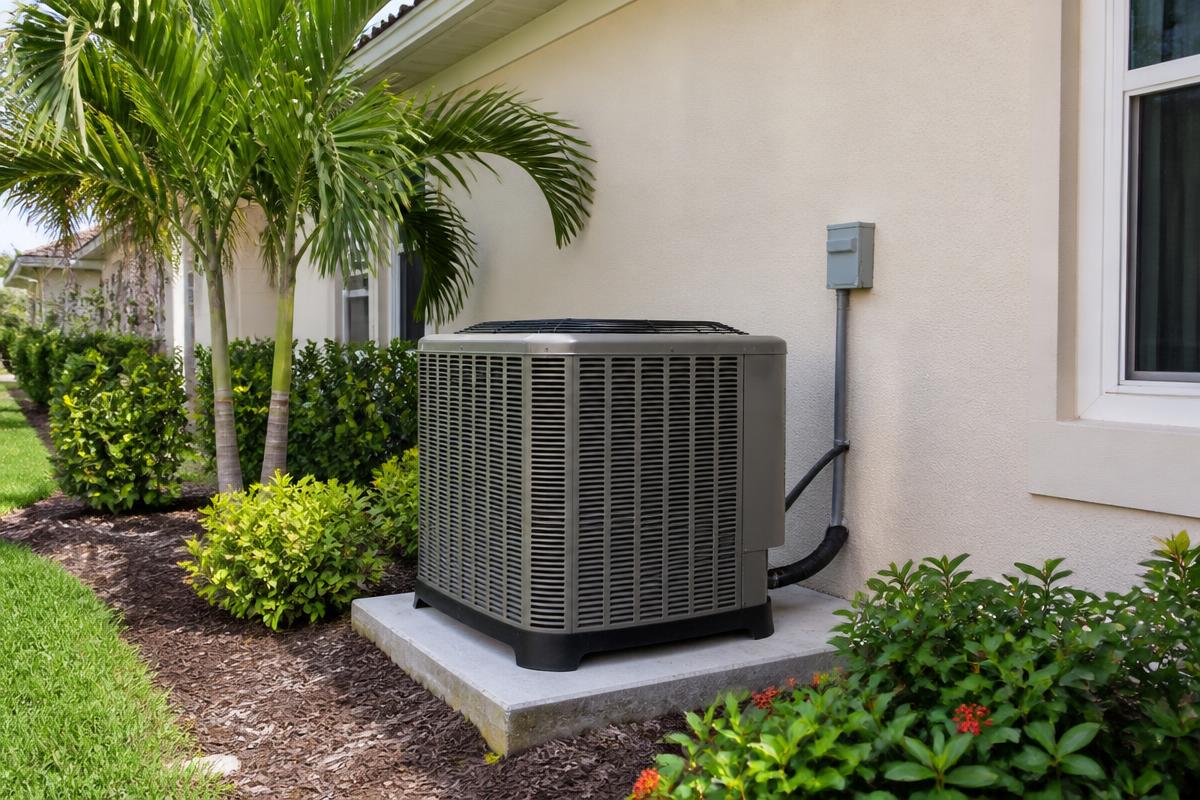
- Outdoor unit — typically a condenser or heat pump sitting on a pad or stand outside the home, rejecting heat that has been collected indoors.
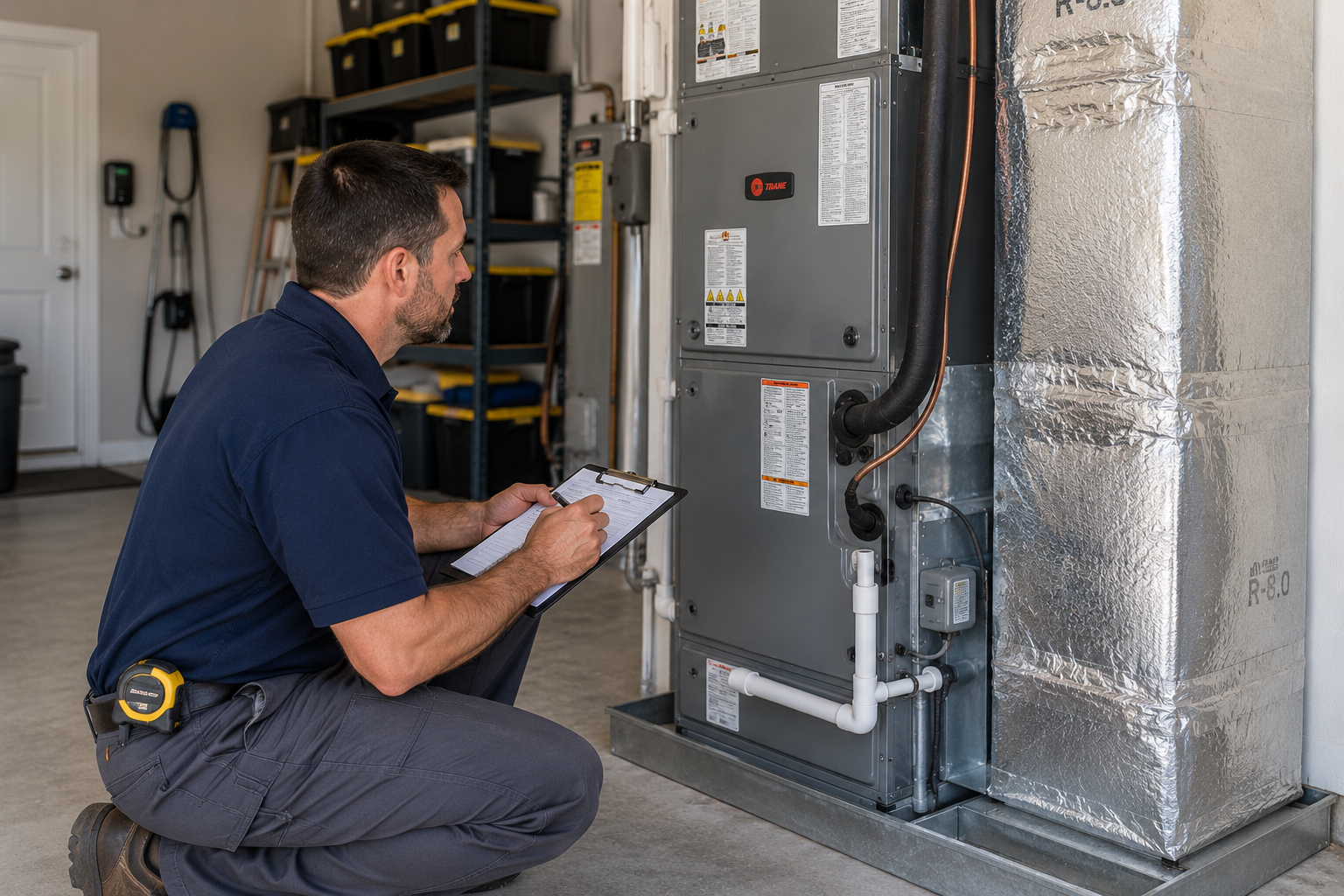
- Indoor unit (air handler) — usually in a closet, garage or attic. It contains the coil and blower that cool the air and move it through the home.
- Refrigerant lines — the insulated tubing connecting the indoor and outdoor equipment.
- Ductwork and registers — the distribution network delivering conditioned air to rooms and returning air to the equipment.
- Condensate drainage — the path that carries away the water the system pulls out of the air.
- Electrical supply and controls — the circuits, disconnect and thermostat that power and operate the system.
When homeowners compare proposals later, this matters: two contractors can quote the same outdoor unit and still be proposing very different systems once ductwork, drainage, electrical and controls are accounted for.
Why Florida Homeowners Replace HVAC Systems
There is no single age at which a system must be replaced. Service life varies with the equipment, the quality of the original installation, how the system was maintained, duct condition, run time and exposure. Age matters, but age combined with condition and performance is what a contractor actually evaluates. Common reasons a replacement conversation starts include:
- Repeated repairs, or a repair that is significant relative to the value of the equipment.
- Cooling performance that has fallen off — longer run times, rooms that never catch up, or the system struggling on the hottest days.
- Indoor humidity that stays uncomfortable even when the temperature is at setpoint.
- Corrosion or physical damage to outdoor equipment, which coastal salt air can accelerate.
- Damage after a storm, flooding or an electrical event.
- Difficulty or expense sourcing parts or refrigerant for older equipment.
- A remodel, addition or window replacement that changes the home's cooling load.
- A planned upgrade for efficiency, comfort or quieter operation.
A well-maintained older system may still have useful life. A newer system with an installation or duct problem may not perform well at all. A written evaluation from a licensed contractor — ideally more than one — is worth more than any rule of thumb.
Repair or Replace?
This is the question most homeowners are actually trying to answer, and it is a judgment call rather than a formula. Rather than applying a rule you read online, work through the factors that apply to your home:
- Cost of the repair relative to replacement — a modest repair on otherwise sound equipment is different from a major component failure.
- Repair history — one isolated failure is different from several service calls across recent seasons.
- Equipment age and condition — considered together, not separately.
- Comfort and humidity performance — whether the system has actually been keeping the home comfortable.
- Operating cost — how the system's energy use has trended, in the context of your usage and rates.
- Parts and refrigerant availability — which can affect both cost and turnaround on future repairs.
- How long you plan to stay — which shapes how you weigh an upfront investment.
- Condition of the ductwork — because new equipment on a poor distribution system may disappoint.
Ask the contractor to put both paths in writing where that is practical, so you are comparing a documented repair scope against a documented replacement scope rather than a verbal impression.
Common Residential System Types
Several system types appear in Florida homes. None of them is universally correct — the right choice depends on the structure, existing ductwork, available space, electrical service, budget and how the home is used. A contractor evaluating your home should explain why a given configuration fits it.
Central split systems
The most familiar arrangement: an outdoor condensing unit paired with an indoor air handler and ducted distribution. Widely serviced and widely understood, and performance depends heavily on correct installation and on the ductwork it is connected to.
Heat pumps
A heat pump cools like a conventional air conditioner and can also provide heating by moving heat rather than generating it, which suits Florida's comparatively mild heating needs. Whether a heat pump is appropriate for a particular home depends on the existing equipment, electrical service and the homeowner's priorities.
Packaged units
Packaged systems combine components in a single outdoor cabinet, often used where interior mechanical space is limited. They are common on some home types and less common on others.
Ductless mini-split systems
Ductless systems pair an outdoor unit with one or more indoor heads and no duct runs. They are often considered for additions, converted spaces, garages, casitas or rooms that a central system has never served well. They are an option to evaluate, not a default answer for a whole home.
Ductwork and Airflow
Ductwork is the part of the system homeowners see least and think about least, and it frequently explains the complaints they care about most. Efficient equipment connected to leaky, undersized, crushed or poorly sealed ducts can still deliver disappointing comfort.
- Rooms that are consistently warmer or cooler than the rest of the home.
- Weak airflow at some registers compared with others.
- Ducts that have been damaged, disconnected, compressed or added onto over the years.
- Insufficient return air, which can limit how well the system moves air at all.
- Insulation condition on ducts running through hot attic space.
- Filtration that fits properly and is accessible enough to be changed regularly.
When you request proposals, ask specifically whether duct evaluation, repair, sealing or replacement is included — and, if it is not included, whether the contractor believes it should be. Scope differences here are one of the biggest reasons two HVAC proposals for the same home do not match.
Humidity and Indoor Air Quality
In a humid climate, moisture removal is part of what a cooling system does. A system that cycles too quickly, moves air incorrectly or is paired with poor ductwork can hold the temperature while leaving the home feeling damp. Homeowners sometimes describe this as the house being cold but not comfortable.
There are options homeowners can discuss with a contractor. None of them is required for every home, and whether any of them is appropriate depends on the house and how it performs:
- Equipment and control strategies intended to improve moisture removal.
- Whole-home dehumidification, where a contractor determines it is warranted.
- Filtration options, matched to what the system can accommodate without restricting airflow.
- Ventilation approaches appropriate to the home's construction.
- Sealing and insulation improvements that reduce the moisture load the system has to handle.
Be cautious with any add-on presented as a universal fix. Ask what problem it is intended to solve in your specific home and what evidence supports that.
System Sizing and Why Evaluation Matters
Sizing means selecting equipment capacity appropriate to the home. It should be based on an evaluation of the actual house rather than a quick assumption, because a system that is too large or too small can both create problems. Oversized equipment may cool quickly and shut off before it has removed much moisture, which is precisely the wrong failure mode in a humid climate.
Factors a contractor should be considering include:
- Conditioned square footage, layout and ceiling heights.
- Insulation levels and the general condition of the building envelope.
- Window area, glazing type, shading and orientation.
- Air leakage and how tight or loose the home is.
- Duct condition, sizing and where the ducts run.
- Occupancy patterns and how the home is actually used.
- Any additions, enclosures or renovations that changed the original design.
Matching the tonnage of the outgoing unit is not by itself an evaluation — the old system may never have been correctly sized, and the home may have changed since. Ask what the contractor based the recommendation on and ask for it in writing.
Efficiency and Operating Cost
Cooling equipment carries published efficiency ratings, and higher-rated equipment generally uses less energy to deliver the same cooling. What that translates to on your utility bill is a different question, and an honest contractor will treat it that way.
Actual results depend on things no brochure can know in advance:
- How the home is used, and the temperatures you actually keep.
- The condition of the ductwork, insulation and envelope.
- Utility rates, which change over time and vary by provider.
- Installation quality — which affects real-world performance considerably.
- How the previous system was performing, which sets your baseline.
Treat specific savings figures with caution unless the contractor explains the assumptions behind them. Efficiency is one legitimate factor to weigh against upfront cost, comfort, humidity performance, warranty and serviceability — not a guarantee.
Thermostats and Controls
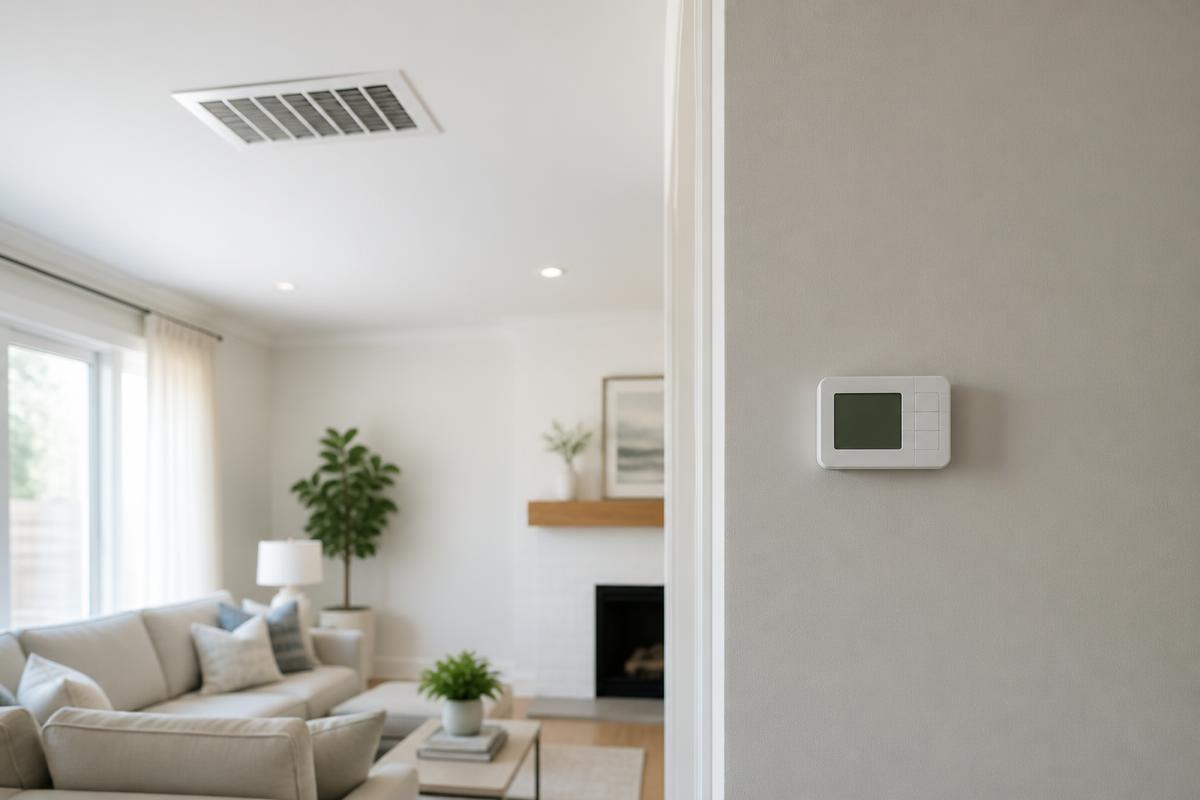
Controls are the part of the system homeowners interact with daily. Programmable and smart thermostats can offer scheduling, remote access, humidity display and usage information, and some systems support zoning so different areas can be controlled separately.
Compatibility depends on the equipment and wiring, so confirm what the proposed system supports rather than assuming any thermostat will work with it. If controls or zoning matter to you, raise it before the proposal is finalized so it is part of the written scope.
Permits, Inspections and Code
HVAC replacement is regulated work, and in many Florida jurisdictions a permit and one or more inspections apply. Exact requirements depend on the scope of the work and on the city or county with jurisdiction, so the reliable answer for your project comes from your local building department or from the contractor who is pulling the permit.
Work of this type is governed by the Florida Building Code and related state requirements, with local administration and interpretation. We intentionally do not restate specific code provisions here, because they are updated over time and applied differently depending on the project.
- Confirm in writing who is responsible for obtaining permits and scheduling inspections. On most projects that is the contractor, but it should be stated rather than assumed.
- Ask whether the proposed scope is expected to require inspection, and at what stage.
- Keep permit and inspection documentation with your home records; it can matter later for insurance, warranty or resale.
- Be cautious of any suggestion to skip permitting on work that normally requires it.
Licensing and Related Trades
HVAC and mechanical work in Florida is performed by contractors licensed for that type of work. Licensing categories differ in what they authorize, and not every company performs every type of mechanical work — some focus on residential change-outs, others on service, ductwork, commercial systems or specialty equipment.
An HVAC project can also touch adjacent trades. Electrical work associated with a system, and handling of refrigerants, carry their own requirements and are not interchangeable with general handyman work. Ask directly who will perform each part of the scope.
- Verify the contractor's license status and insurance yourself before signing.
- Ask which portions of the work are performed by employees and which by subcontractors.
- Ask how electrical work in the scope will be handled and by whom.
- Get the full scope in writing rather than relying on a verbal description.
Outdoor Equipment, Storms and Drainage
Outdoor equipment lives in Florida's weather. Placement, mounting, clearances and drainage are practical considerations to discuss with your contractor, and specific requirements depend on your jurisdiction, your site and the equipment involved.
- How and where the outdoor unit is mounted and secured, and what applies in your area.
- Clearances around the unit for airflow and for future service access.
- Exposure considerations for coastal properties, where salt air can accelerate corrosion.
- Where condensate drains, whether the path is accessible, and how overflow is addressed.
- Whether the electrical disconnect and circuit are appropriate for the equipment being installed.
- How the equipment will be protected or handled ahead of a storm.
Ask the contractor to explain what applies to your property rather than assuming a general practice you have read about elsewhere is a requirement.
Questions to Ask an HVAC Contractor
The goal is not to test the contractor — it is to make sure you and they are describing the same project before anyone signs anything.
- What did you evaluate beyond the existing unit, and what did you find?
- How did you arrive at the recommended equipment and capacity for this home?
- Is any ductwork evaluation, sealing, repair or replacement included in this price?
- Who pulls the permit, and what inspections do you expect on this scope?
- What electrical work is included, and who performs it?
- What exactly does the written scope cover — and what is explicitly excluded?
- What are the equipment warranty and the labor warranty, separately, and what registration is required?
- What is the expected timeline, and what happens to the home during the change-out?
- What is the payment schedule?
- If the installation reveals additional work, how is that documented and priced before it proceeds?
- Who is my point of contact during the project?
Preparing for an HVAC Estimate
A contractor can give you a more useful proposal if they can see the whole system and understand what the home has been doing. A little preparation goes a long way:
- Clear access to the outdoor unit, the indoor air handler, the attic and the electrical panel.
- Write down the rooms that are uncomfortable, and when — afternoons, certain seasons, certain conditions.
- Gather recent service records and any notes on past repairs.
- Have recent utility bills available if operating cost is part of your decision.
- Note the age of the system if you know it, and whether it is original to the home.
- Have someone home who can answer questions and walk the property with the contractor.
- Write down your own priorities: comfort complaints, humidity, noise, efficiency, budget or timing.
Comparing HVAC Proposals
Comparing headline prices alone is the most common way homeowners end up disappointed. Compare complete scopes instead — the same equipment can appear in two proposals that include very different work.
- Specific equipment proposed, including the indoor and outdoor components as a matched system.
- Whether ductwork, returns, filtration and registers are addressed.
- Condensate and drainage work included.
- Electrical work included.
- Permitting and inspection handling.
- Thermostat or controls included.
- Removal and disposal of the old equipment.
- Warranty terms — equipment and labor stated separately.
- Timeline, payment schedule and how change orders are handled.
- What each proposal excludes, which is often the most revealing part.
If one proposal is much lower, the useful question is not whether it is too good to be true, but what specifically it contains that the others do not — or leaves out.
Planning Your HVAC Project
Most residential change-outs are short projects compared with a remodel, but planning still helps.
- Timing — demand on contractors is typically heaviest during the hottest stretch of the year, and planning ahead gives you more room to compare options.
- Equipment availability — confirm that the proposed equipment is available on your timeline, and what happens if a substitution becomes necessary.
- Installation day — expect the home to be without cooling for part of the day, and plan for pets, work-from-home schedules and access.
- Site protection — ask how the crew protects floors and finishes on the path to the equipment.
- Closeout — confirm the system is started, checked and demonstrated to you before the crew leaves.
- Documentation — keep the invoice, warranty registrations, permit and inspection records together with your home file.
- Maintenance — ask what routine maintenance the system needs and what the warranty expects of you.
Florida Safe Home is an independent homeowner-to-contractor matching platform. We do not install, repair or service HVAC equipment, and we do not hold an HVAC contractor license. Information on this page is general education, not code, legal or engineering advice, and requirements vary by project and jurisdiction.
Questions Florida Homeowners Ask
Should I repair or replace my air conditioning system?
It depends on the cost of the repair relative to replacement, how many repairs you have had recently, the equipment's age and condition together, how well the system has actually been keeping the home comfortable, the condition of the ductwork and how long you plan to stay. Ask a licensed contractor to document both options where that is practical.
Do I need a permit to replace an HVAC system in Florida?
Many jurisdictions require a permit and inspection for this type of work, but the requirements depend on the scope and on the city or county with jurisdiction. Confirm with your local building department or with the contractor, and get in writing who is responsible for pulling the permit.
Does my ductwork matter if I install new equipment?
Often, yes. Leaky, undersized or damaged ducts and insufficient return air can limit what any equipment delivers. Ask each contractor whether duct evaluation or work is included in their proposal, and if not, whether they think it should be.
How is the right system size determined?
It should come from an evaluation of your actual home — square footage and layout, insulation, windows and orientation, air leakage, duct condition and how the home is used — rather than simply matching the old unit's capacity. Ask the contractor what the recommendation was based on.
Will a higher-efficiency system lower my electric bill?
Higher-rated equipment generally uses less energy for the same cooling, but the effect on your bill depends on your home, your ductwork, how you use the system, installation quality and your utility rates. Ask a contractor to explain the assumptions behind any savings estimate rather than treating it as a guarantee.
Why does my home feel humid even when the temperature is right?
Humidity control is a separate job from temperature control. Short cycling, airflow problems, duct issues or equipment that does not suit the home can all leave moisture behind. It is worth describing the symptom specifically to a contractor rather than only reporting the thermostat reading.
Does Florida Safe Home install or repair HVAC systems?
No. Florida Safe Home is a matching platform that connects Florida homeowners with contractors. The contractor you hire performs the work and holds the license for it. Our service is free for homeowners.
Official sources
The official references used when reviewing this page. Requirements change, so check the source directly for the current details.
- Florida DBPR license verification
Search the state licensing record for a contractor before you hire.
- ENERGY STAR — air-source heat pumps
Federal efficiency program information on residential heat pump equipment.
- U.S. DOE — HVAC equipment sizing guideline
Federal research guidance on sizing residential heating and cooling equipment.
Planning an HVAC Project?
Tell us about your project and we will work to connect you with contractors in your area so you can compare options and decide for yourself.
Get Matched With an HVAC ContractorFree for homeowners. No obligation.